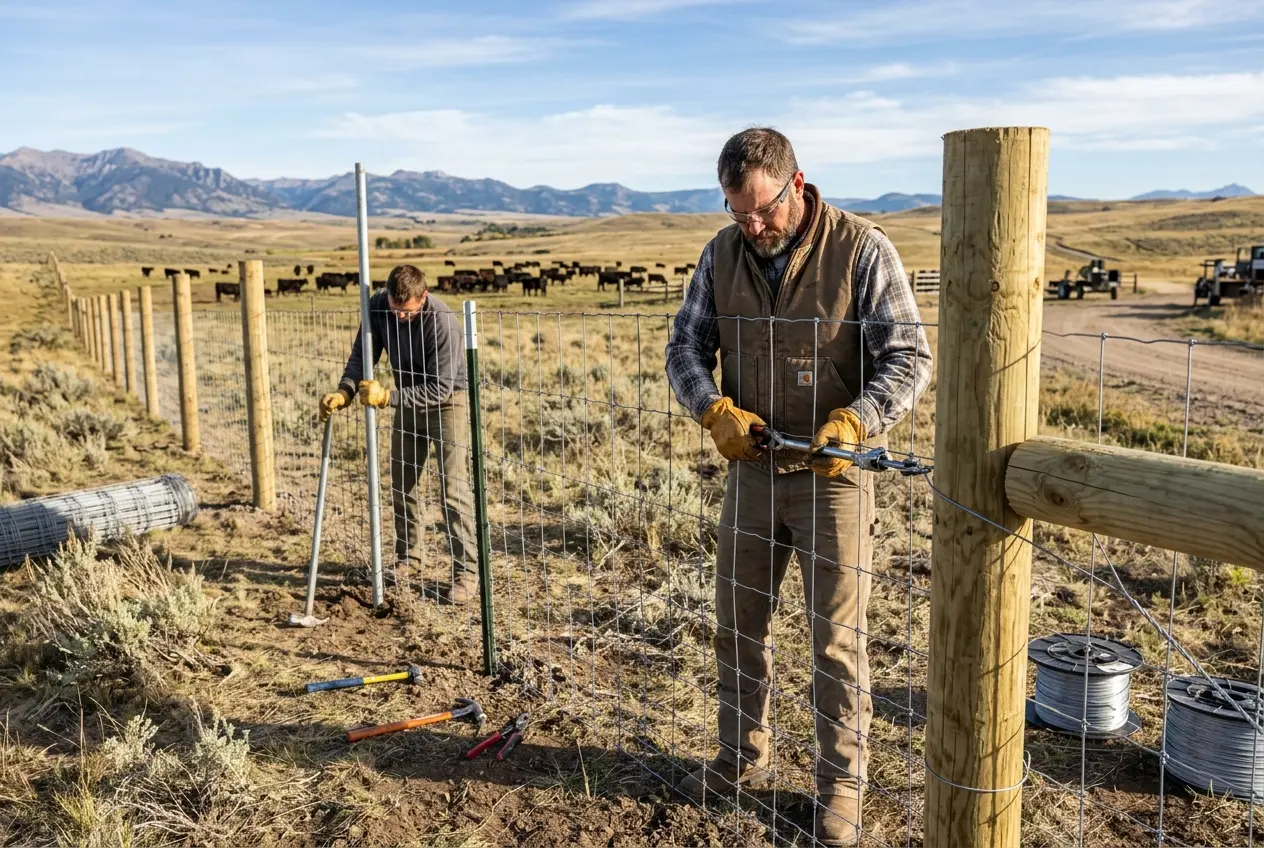
Ranch fencing in the Hill Country requires specialized techniques to handle rocky outcrops and dramatic elevation changes. Our crew uses flexible post-setting methods that accommodate Boerne's karst topography without compromising stability.
We install four-rail designs with 12-gauge galvanized wire for equestrian properties, spacing boards to prevent foal entrapment. Corner bracing follows Texas AgriLife Extension standards to withstand livestock pressure. For perimeter fencing near New Braunfels, we add bottom wires to deter feral hogs.
Materials are selected based on use: treated pine for working corrals, cedar for show barn aesthetics, and metal T-posts for temporary grazing rotations. All fasteners are corrosion-resistant to handle morning dew and frequent washdowns.
We install four-rail designs with 12-gauge galvanized wire for equestrian properties, spacing boards to prevent foal entrapment. Corner bracing follows Texas AgriLife Extension standards to withstand livestock pressure. For perimeter fencing near New Braunfels, we add bottom wires to deter feral hogs.
Materials are selected based on use: treated pine for working corrals, cedar for show barn aesthetics, and metal T-posts for temporary grazing rotations. All fasteners are corrosion-resistant to handle morning dew and frequent washdowns.
Our Process
- 01 Step 1: Mark underground utilities and rock layers using ground-penetrating radar
- 02 Step 2: Set posts with hydraulic drivers where rock prevents digging
- 03 Step 3: Install tensioned wire with spring-loaded stretchers for proper give
- 04 Step 4: Add predator-proof apron fencing where coyote activity is high
Benefits
- Prevents soil erosion on sloped parcels near Canyon Lake
- Metal components resist damage from mesquite thorns
- Visible from roads for safety in rural Helotes
- Gates sized for tractor access in agricultural zones
Frequently Asked Questions
How deep should posts be in rocky soil?
We use 24" minimum depths with expanding foam stabilizers in shallow bedrock areas—common around Grey Forest.
Can fencing cross seasonal creeks?
Yes, with removable sections that allow floodwaters to pass through without damage. We design these for properties near Cibolo Creek.
What spacing keeps goats contained?
4"x4" woven wire with a hot wire top works best for Boer goats. We'll customize based on your herd's behavior.